Engineering · 03
GNSS RTK Module Integration
Designed, integrated and validated a modular GNSS RTK localization subsystem for a ROS2-based mobile robot, enabling centimeter-level outdoor localization through mechanical, electrical and software integration.
Field
Robotics
Period
2026
Focus
Systems engineering / Robotics / ROS2
Overview
Bringing centimeter-level localization to an autonomous mobile robot.
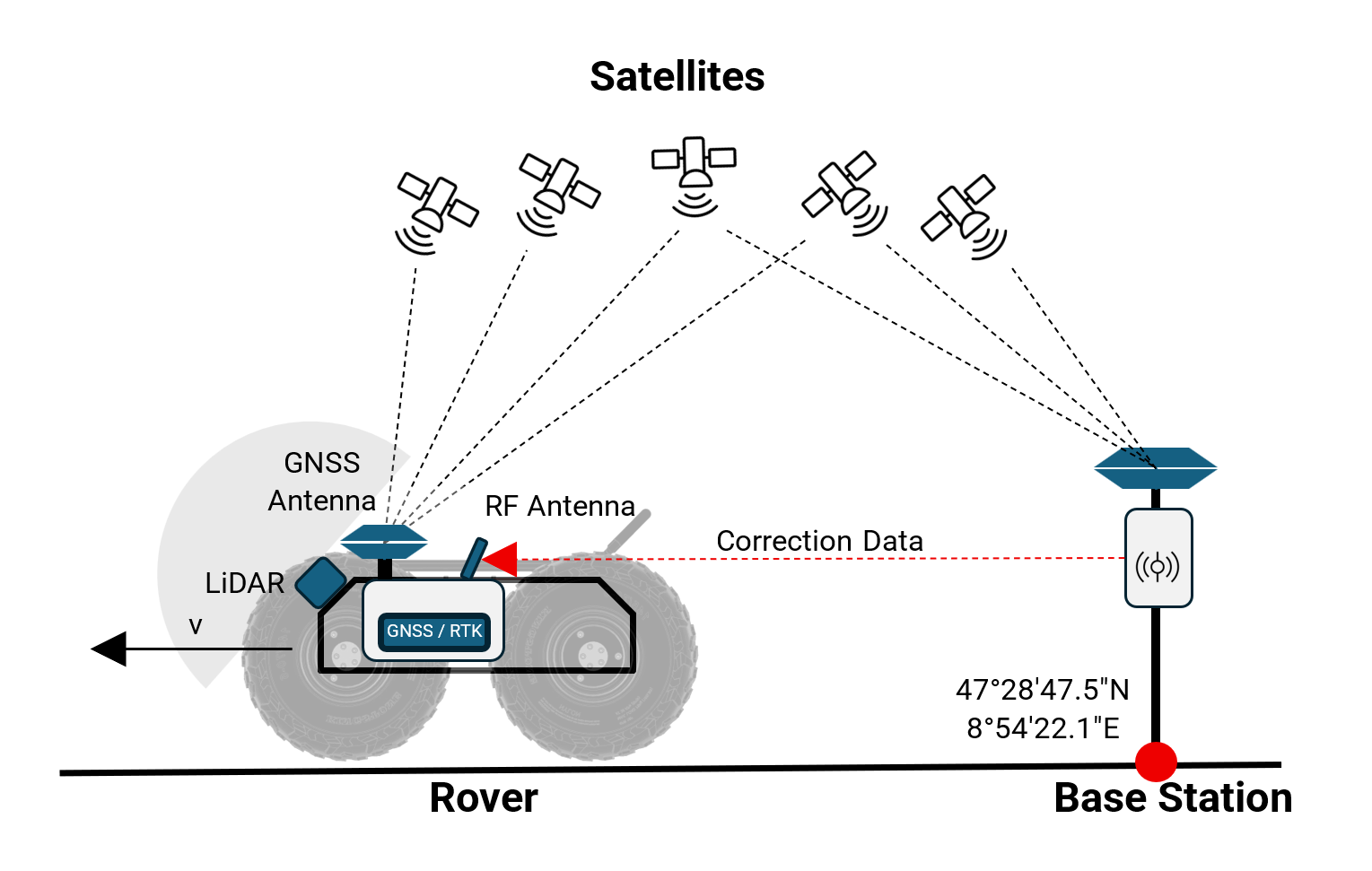
Reliable outdoor navigation requires accurate global localization to complement LiDAR, cameras and inertial sensors. While SLAM provides precise local positioning, accumulated drift limits long-term operation over large distances.
This project focused on integrating a modular GNSS RTK subsystem into the Husarion Panther platform, combining mechanical design, hardware integration, ROS2 software integration and experimental validation into a complete localization solution.
Key challenges
Integrating precise localization without compromising modularity.
The system had to integrate into the existing robot without compromising positioning accuracy, serviceability or reliability.
- Mechanical integration of the GNSS antenna and LiDAR
- Design of a modular interface
- ROS2 integration using a dedicated Raspberry Pi 5
- Cable management and EMC-aware hardware layout
- Experimental validation of positioning accuracy
Solution
A modular GNSS RTK subsystem designed for integration and field testing.
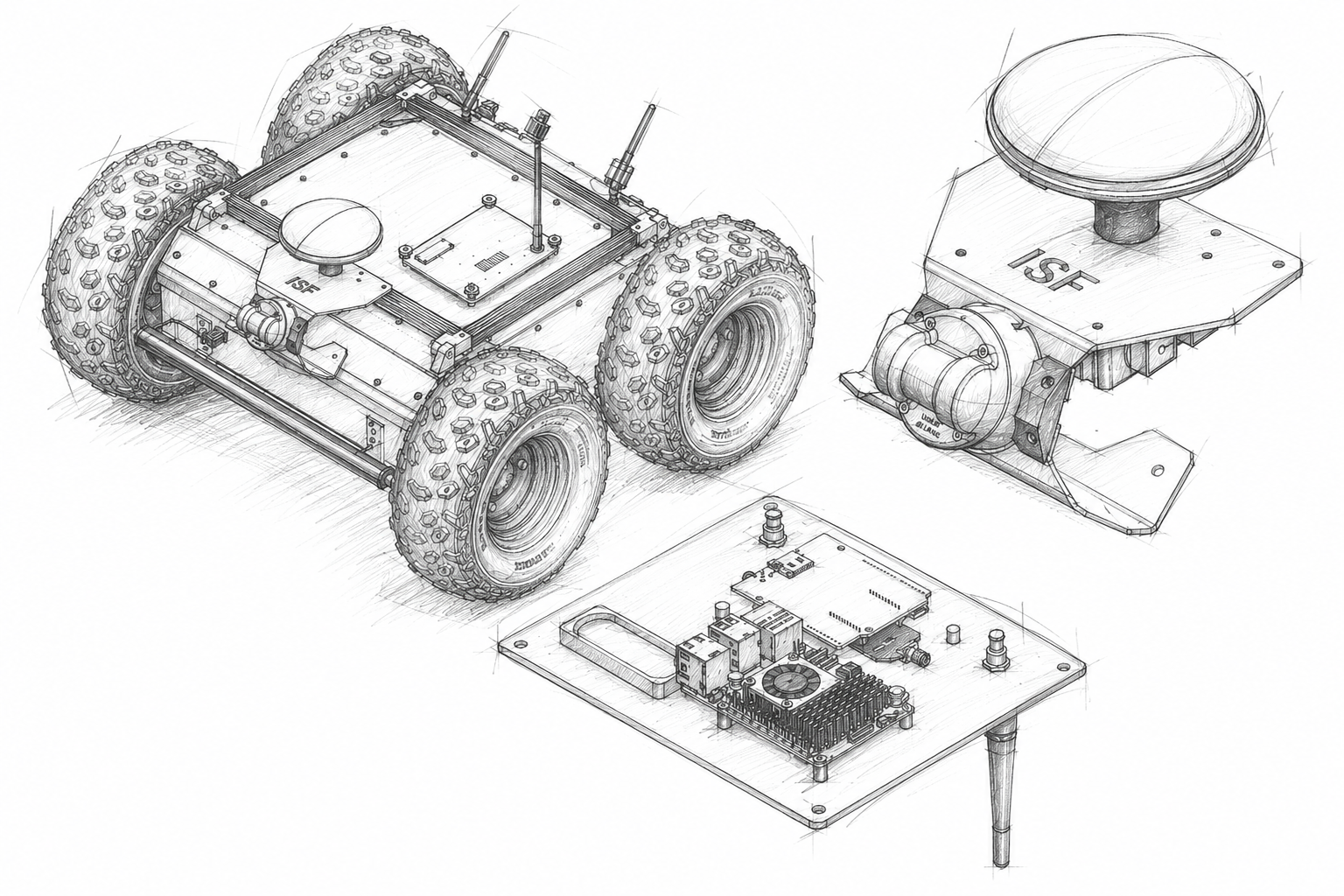
The final solution combined the GNSS RTK receiver, antennas, LiDAR and embedded computing hardware into a modular subsystem for the Husarion Panther platform.
A dedicated Raspberry Pi 5 handled the ROS2 integration, while the mechanical interface supported accurate antenna placement, structured cable routing and straightforward maintenance.
The subsystem was evaluated through experimental testing to verify positioning accuracy and system reliability under realistic outdoor operating conditions.
Project report
Complete engineering report
Read the complete project report covering system architecture, mechanical design, ROS2 integration and experimental validation.
Reflection
What I took from the experience.
This project strengthened my understanding of systems integration. Designing reliable robotics requires more than selecting components—it requires careful consideration of mechanical design, electrical interfaces, software architecture and verification as one coherent system.
Working across CAD, manufacturing, ROS2 integration and experimental validation reinforced the importance of building solutions that are not only functional, but modular, maintainable and measurable.
It also showed me how quickly engineering becomes multidisciplinary. A seemingly simple localization upgrade required decisions spanning mechanical design, electronics, embedded computing, ROS2 software and field testing. Bringing these elements together was one of the most rewarding parts of the project.