Engineering · 05
Core Sand Batch Mixer
Developed and validated a new horizontal batch mixer for a core sand preparation plant, with focus on mixing performance, structural design, wear resistance, maintainability and compact integration.
Field
Mechanical engineering / Foundry equipment
Period
2016 – 2020
Focus
Product development / Mechanical design / Testing & optimization
Overview
Developing a new horizontal batch mixer.
During my mechanical engineering studies, I worked part-time at Lüber GmbH, a manufacturer of machinery and equipment for the foundry industry, where I was responsible for developing a new batch mixer for core sand preparation from initial requirements and concept development through prototype testing and final implementation.
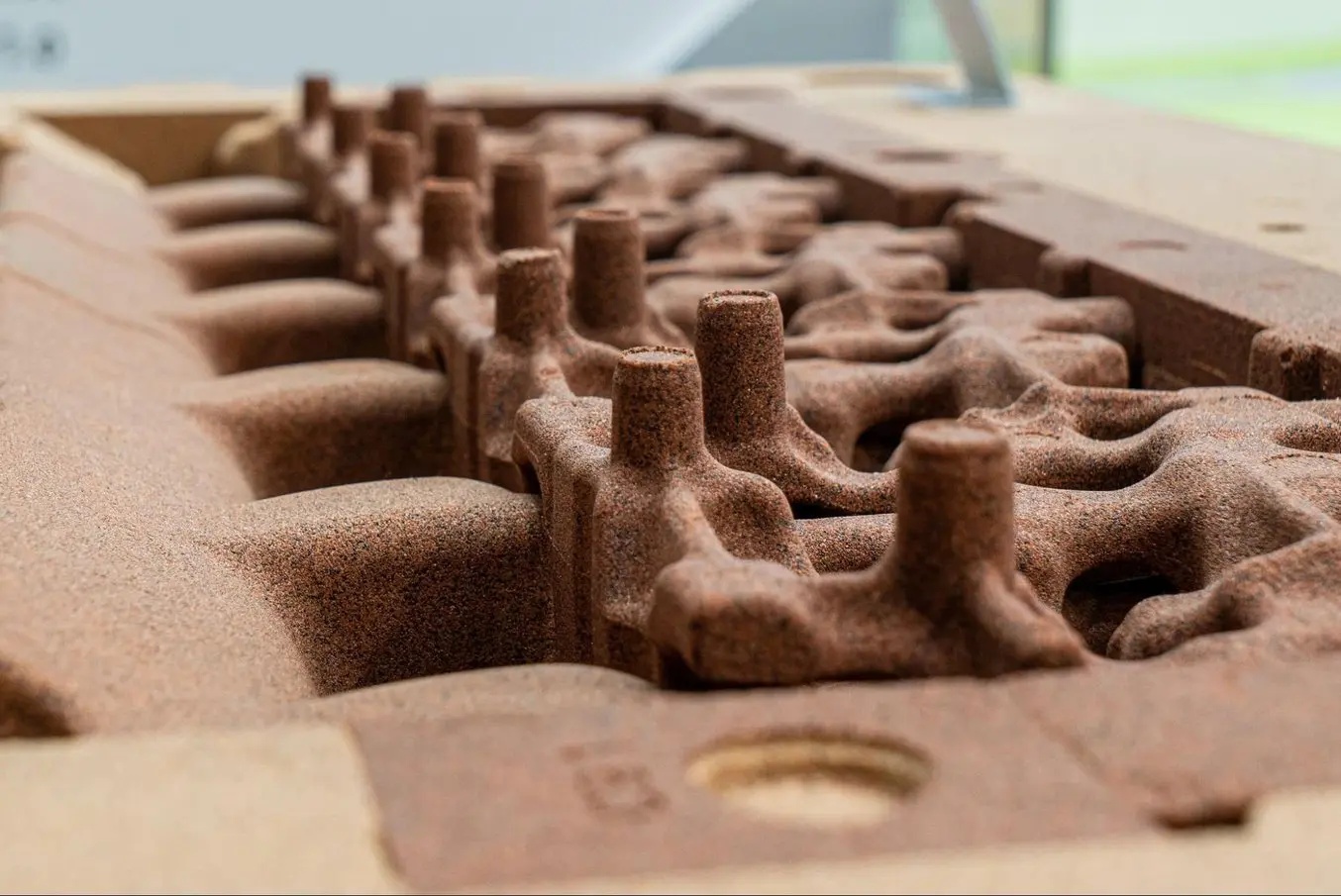
Core sand is used in foundries to create complex internal cavities in cast components, such as the cooling channels inside an engine block. Preparing this sand requires reliable and homogeneous mixing of the individual components.
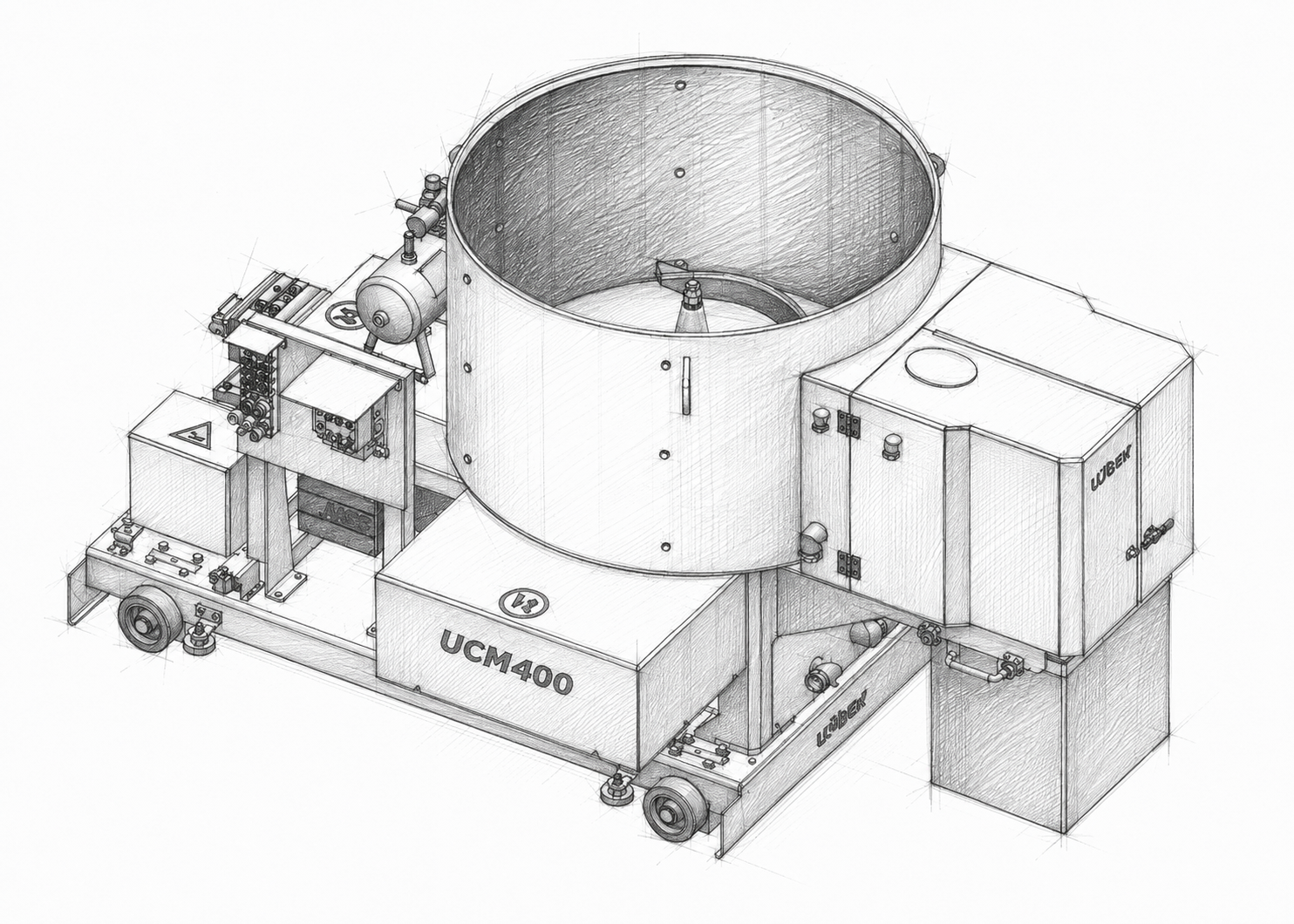
The existing mixers used a vertical mixing shaft, providing a large mixing volume and simple shaft sealing, but with limitations in mixing time, discharge and maintenance access. A horizontal mixing concept was developed to improve material circulation and use gravity to support mixing and discharge.
The main objective was to achieve high throughput within a compact installation space while improving mixing performance, durability and maintainability.
Key challenges
High mixing performance in a compact and mechanically robust design.
The mixer had to process large batches within a short cycle time while remaining compact, reliable and easy to maintain. The combination of abrasive sand, liquid binder, rotating components and dynamic loads resulted in several mechanical design challenges.
- High throughput within a compact installation space
- Homogeneous mixing within a short cycle through optimized mixing-tool geometry
- Structural stiffness and vibration control, supported by FEM analysis
- Wear-resistant and low-adhesion materials for abrasive sand and binder
- Reliable shaft sealing against sand, binder and water during cleaning
- Low residual sand volume and good access for cleaning and maintenance
- Design for manufacturing, assembly, cost and modular plant integration
Solution
A horizontal mixing system with a rotatable vessel.
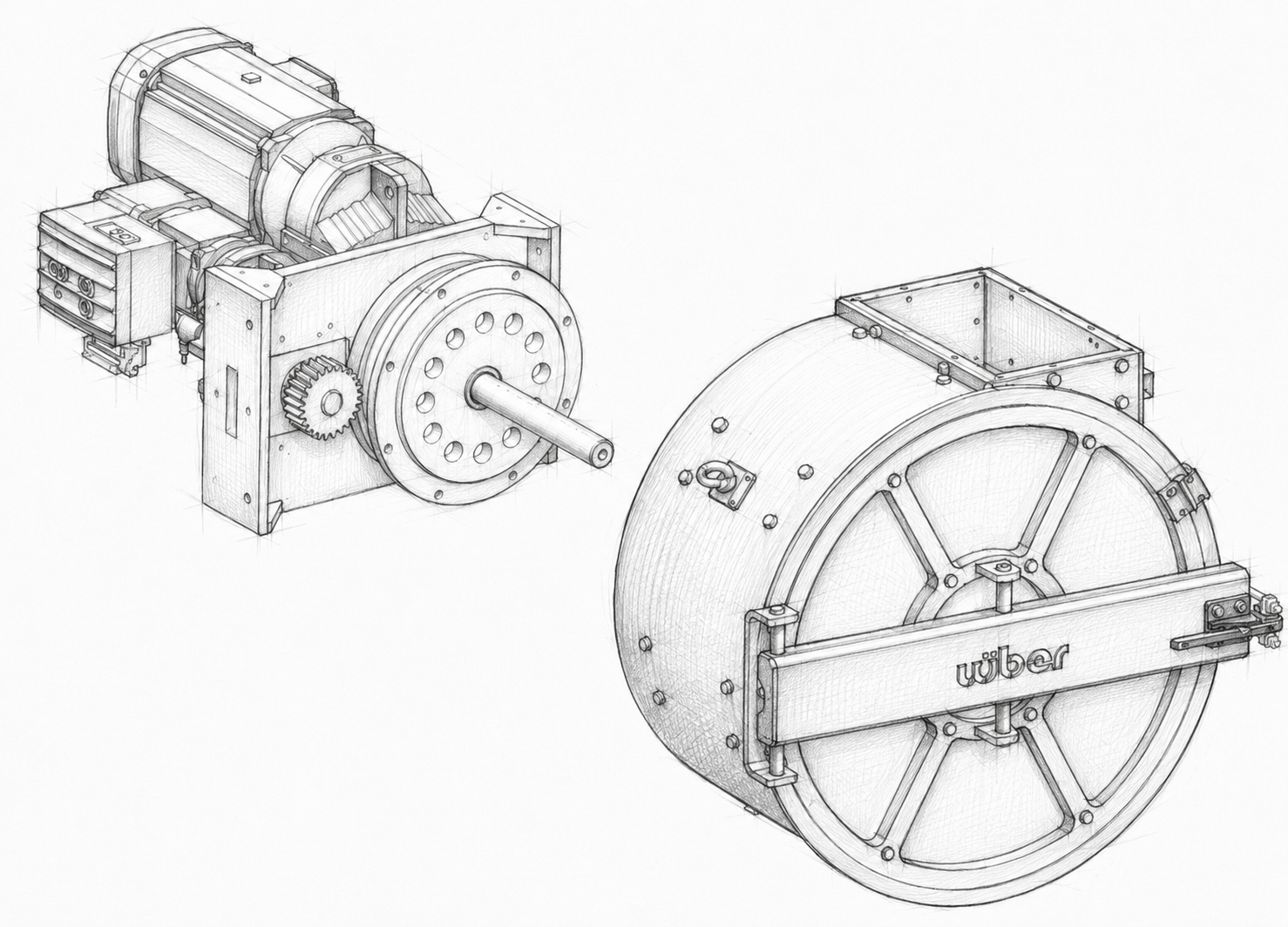
The developed concept combines a horizontal mixing shaft with a rotatable vessel. A single opening is used for both filling and discharge by rotating the vessel between defined process positions.
The mixing tool lifts and circulates the sand while gravity returns the material into the mixing zone. Its geometry was optimized for homogeneous mixing and efficient discharge with low residual sand.
The supporting structure was designed for the dynamic loads of the mixing process and verified using FEM analysis. Wear-resistant, low-adhesion materials and a sealed shaft interface were selected for the abrasive sand-binder mixture and water-jet cleaning.
Prototypes were tested with sand and iteratively optimized for mixing performance, structural design, manufacturability and maintenance. The final mixer was designed as a modular subsystem for integration into different plant configurations.
Product documentation
Core sand preparation plant LC
Lüber’s product documentation provides additional information about the core sand preparation plant and the horizontal high-performance batch mixer used in the production system.
Reflection
What I took from the experience.
The iterative development process showed me the value of combining engineering analysis with physical testing. FEM simulations, prototype tests and practical observations were used to improve the design across several iterations.
The project was also my first experience managing a development project across different stakeholders. I coordinated with internal departments, external partners and suppliers while balancing technical requirements, manufacturing, cost and project timing.
A major milestone was the first commissioning of the mixer as part of a core sand preparation plant at a major automotive manufacturer in Germany. Supporting the system from initial concept through to operation in a production environment was a particularly valuable engineering experience.